Home / Good Stories

Good Stories

Stories of the Foundation’s wards — where music and kind people change lives (in Russian).

A Tango of Dreams

Her parents say it was a birth injury. After that, life was anything but easy: at five she lost a leg, and at sixteen the other one. In all, Derya Söyüç came through thirty-three operations. Came through them, and went on.

How is that possible? I don’t know. Perhaps it is possible when a person has a dream and gives her whole life to it.

Since childhood she had dreamed of dancing. She listened to music and tried — but how? How? She made pirouettes with her hands, spinning them in the air, fighting for movement, fighting to be like everyone else. She wanted to dance a tango. And, imagine, her dream came true.

When a person has that much will, that much love of life, that much creative power, the world comes to help — and the most improbable thing becomes real.

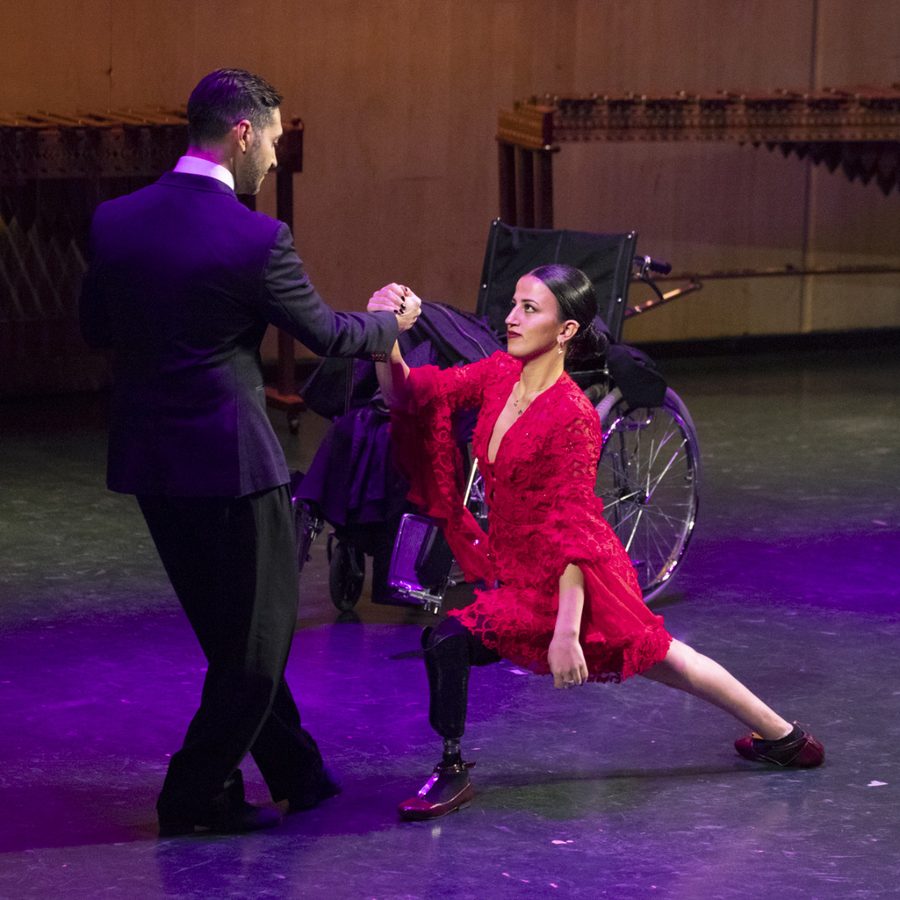
Picture it: during our 16th International Festival “Moscow Meets Friends”, a young and very beautiful girl was wheeled onto the stage of the Chamber Hall of the Moscow International House of Music — and suddenly a tango began. The tango she had dreamed all her life of dancing on a stage. A young man came up to Derya and offered her his hand. And she rose, lightly and freely, and the miracle began.

A tango of love!

That was our guest from Türkiye, Derya Söyüç — and the “Miles of Mercy” programme helped us a great deal.

Be merciful, and life will repay you.


Music Keeps Life Going

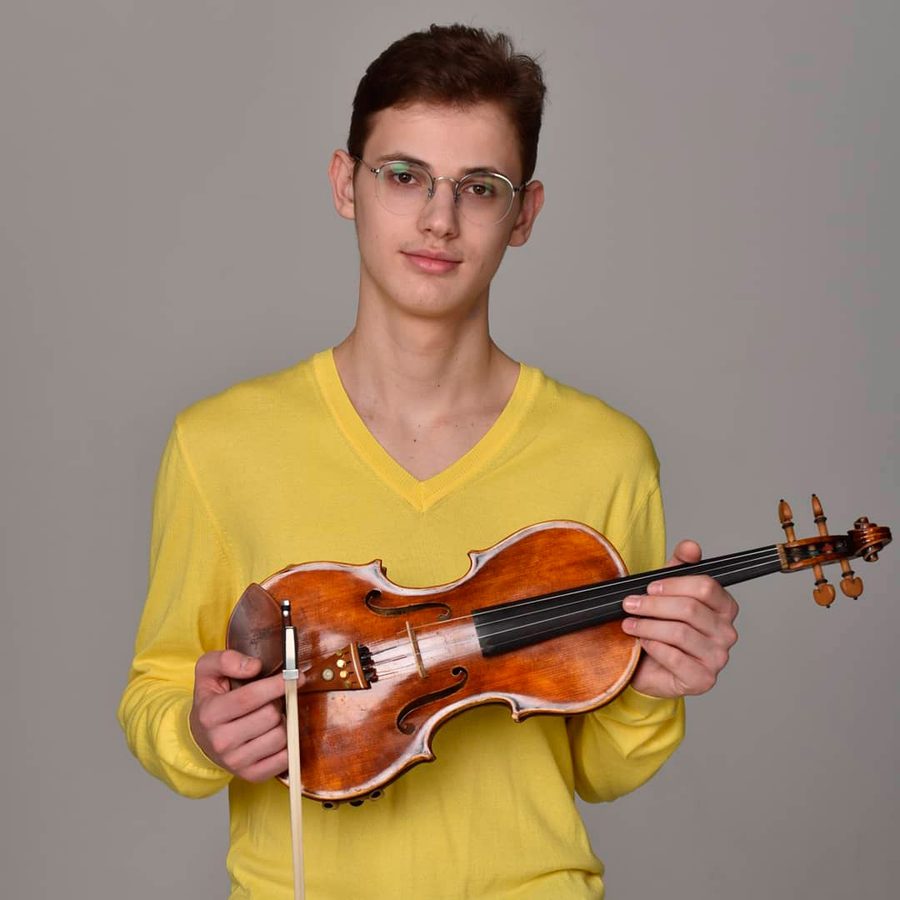
William was not one to complain. When his health began to fail, he simply put it down to the workload at school. An ambulance took him straight from the Central Music School of the Moscow Conservatory, where he was studying. At fourteen, a gifted musician from Sevastopol was given a terrifying diagnosis: only a bone-marrow transplant could save him. What now? How does one go on?

But William did not let himself despair. This cannot be, this must not be. He believed in a miracle, because he wanted to play, he wanted to create. He received the transplant. Will and love of life won. He walked out onto the stage of the Chamber Hall — pale, in a surgical mask — and played so that the hall rose to its feet and would not let him go.

Together we won. William is now finishing the Central Music School of the Moscow Tchaikovsky Conservatory and preparing to enter the Conservatory itself.


A Violin, a Girl, and the Magic of Kindness

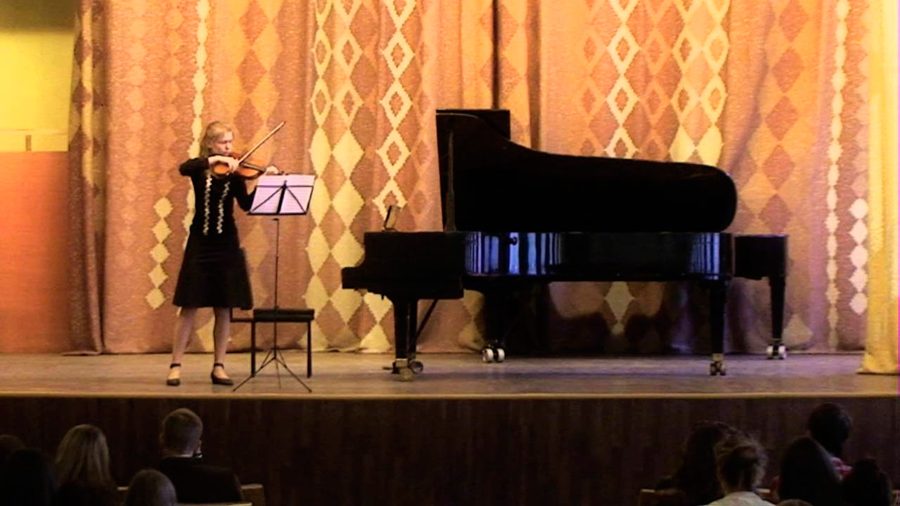
Lida Stupakova-Koneva is a pupil of the Central Music School of the Moscow Tchaikovsky Conservatory.

The gifted girl came from Sergiyev Posad to study at the Central Music School of the Moscow Tchaikovsky Conservatory. She came to the Foundation together with her brother Afanasy — charming, smiling, delightful children.

Lida began performing at the Foundation’s concerts. She is exceptionally able, and has played a great deal in Russia and abroad — focused, whole-hearted, hard-working.

Violinists practise for many hours a day, pressing the instrument against the chin. It leaves them a lifelong mark, as though the violin had claimed them. And one day, as Lida tells it, she felt that something was in the way there — as if a small ball had been placed under the skin. And then came that sudden turn.

The doctors examined her. We will not try to describe how much courage it took, how much parental love, how much attention and care from everyone who believed in this girl and had come to love her. But love, and faith in human kindness, and a sense of duty to Her Majesty Music, won out.

In that hard hour we were all beside her, and today Lida is a brilliant student of the Moscow Tchaikovsky Conservatory and a superb performer. Her professors have great hopes for her — and so do we, the Vladimir Spivakov International Charity Foundation.

“It is hard to overstate what the Vladimir Spivakov International Charity Foundation has meant for our family in particular. The help of the Foundation, through its director Ekaterina Shirman, proved quite literally decisive both for its scholar and for all of us — namely, in its support and involvement in solving serious health problems. Most happily, the Foundation’s involvement played the decisive part in the fate of a gifted child, and the results of such earnest concern did not take long to appear: only a few months after the operation the girl performed with success in the Great Hall of the Moscow Tchaikovsky Conservatory. That help will always remain for us the most important part of our work together. One can only add the exceptional opportunities, so valuable to a young violinist, that the Foundation has and gladly gives to its scholars — a range of venues and concerts on them, including the chance to play with an orchestra. Watching the Foundation at work, one can only be glad that there are people who tirelessly do everything possible for gifted children. The range of help the Foundation gives us and other scholars, financial help included, is very wide indeed, whatever a family’s circumstances. Our deepest thanks to this team. — Vladimir and Maria Stupakov-Konev, parents.”


A Christmas Miracle

Some things in life are beyond belief — beyond reason.

They are simply MIRACLES.

A small provincial town three hundred kilometres from Yekaterinburg, with a single little church where Father Nikolai has served for years. It would once have been called a village; now it is the town of Asbest, which few people have ever heard of. Into the family of this devout priest a sixth child is born — a fine boy, lively, cheerful, talkative, blue-eyed and fair-haired, a real cherub. You could not look at him enough.

And then — suddenly, as it always happens — the mother notices that at three years old the energetic little boy tires quickly, gasps for breath and cannot recover for a long time. The parents take him to the doctors in Asbest, who spread their hands and send him to Yekaterinburg. After long examinations the diagnosis is made: a congenital double heart defect with arrhythmia. And then the sentence that shook the parents: “Incompatible with life.” He is three years old. How is a mother to take that in? The child is doomed. She rushes from one office to another; the doctors refuse to operate on a three-year-old. “He will not survive it,” they say. “He will die on the table.”

The father and mother pray fiercely, sending their pleas to God.

The doctors’ verdict: six months to live.

And then, suddenly…

Tradition holds that the Tsarevich Alexei was buried in Yekaterinburg, at the place where the imperial family was shot. The mother often came to the grave of the royal child, prayed and waited. The days shrank like a piece of shagreen; time was running out. One day, after another prayer at the grave, she was walking down the street and saw a poster: “Vladimir Spivakov invites you…”. Something caught at her heart, as if she had been given a push.

The tour was already under way; tickets for the maestro and the Moscow Virtuosi had long been sold out. Her feet carried her to the philharmonic box office, past the stage door. She stood there with her arms hanging, not knowing what to do. Then she felt someone looking at her. A man was standing on the steps, smoking and watching her closely. He came over and asked: “What has happened to you?” She told her story briefly. He listened and said: “Wait, don’t go, I want to understand it all.” Then he brought her an invitation to the concert and said: “Wait for me here afterwards.” It was Maestro Spivakov.

At half past two in the morning the telephone rang at the home of the Foundation’s director, Ekaterina Shirman. Spivakov’s low voice told her the story.

A day later the child was brought to Moscow for an eight-hour operation of the greatest difficulty, in the course of which unforeseen complications arose. But God led the way and the surgeons did the almost impossible: the operation succeeded. The little boy went home.

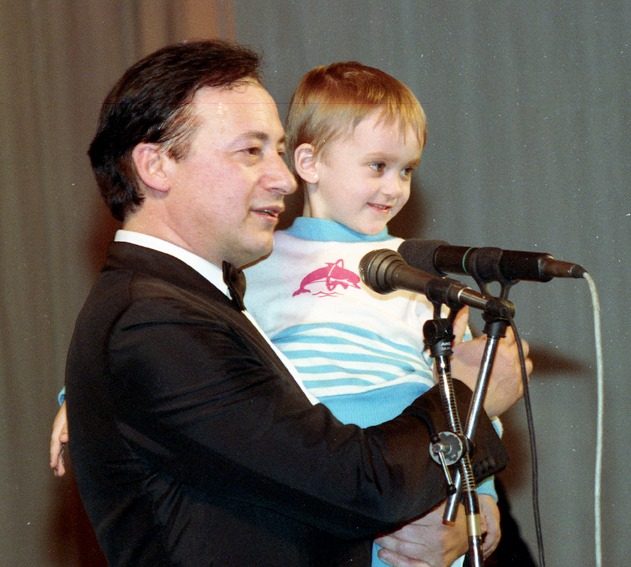
At five it turned out that the boy had perfect pitch, and at six he began to play the violin. Vladimir Spivakov chose a small violin for him and presented it ceremonially after a concert in Yekaterinburg. Little Ioann was overjoyed. After that the road ran straight: the Urals Music College, then the Moscow Tchaikovsky Conservatory.

The Foundation went on supporting Ioann. He graduated from the Conservatory with distinction and joined the trainee group of the National Philharmonic Orchestra of Russia under Vladimir Spivakov. And today Ioann Berdyugin — is a soloist of that celebrated orchestra under Vladimir Spivakov.

Such is this happy Christmas story.

Kindness That Works Miracles

The story of a girl from Krasnodar. Polina Konogray performed at the Foundation’s concerts from the age of six — bright and gifted. She danced and appeared with the Moscow Virtuosi. We were delighted when she entered the Vaganova Academy and her career began to flourish. Hard work and talent gave her parts in many productions, and she never turned a role down. And then, suddenly…

It always happens suddenly. An injury, a hospital, crutches, and a verdict short and cruel: “You will never dance again — you will never even walk.” Then the long ordeal of hospitals and doctors, and pity or indifference in other people’s eyes.

A miracle also comes unexpectedly. The Foundation, and Vladimir Spivakov personally, did everything so that a highly complex operation could be performed in Germany — and after that came courage, will and work, work, work. And then, at the House of Music, during the awarding of the Moscow Mayor’s grants, a slender, beautiful and extraordinarily graceful young woman walked onto the stage in high heels and handed another child the prize for selflessness and compassion. It was Polina Konogray, who had come back to life renewed and happy.


Love Always Has a Chance

She was still a very small person when, after playing at one of our concerts, she was given a violin by the Maestro himself, presented through the Foundation. She finished school beautifully and entered the Conservatory with distinction — young, lovely, full of hope and eager to play on the best stages in the world. But trouble always comes suddenly.

She travelled with the student orchestra to play in one of Russia’s cities and paid no attention to feeling unwell; the doctor said it was nothing serious. She played wonderfully at the concert — and in the morning the worst happened.

Guillain-Barré syndrome: complete paralysis, total immobility. Not a toe, not a finger, nothing. Did that mean for ever? When her father Andrei called, he could not speak, only weep. He managed just one sentence: “How can she be saved?”

The Foundation helped Olesya obtain a place for rehabilitation at the Research Centre of Neurology.

Not long ago Olesya wrote a letter — wrote it herself. She can sit up on her own now, eat on her own, and is learning to walk. She writes to the Maestro and listens to his recordings. And she has begun to practise the violin again — her beloved, precious instrument.

P. S.

Love and kindness always have a chance, and hope never goes out. Some time ago the doors of the Conservatory opened and a young woman walked lightly into the hall with a cane. The students crowded round her joyfully, everyone rushed to hug and kiss her, some laughed, some cried, and all of them were happy. Because it was Olesya Suvorkina.